Technical articles
-
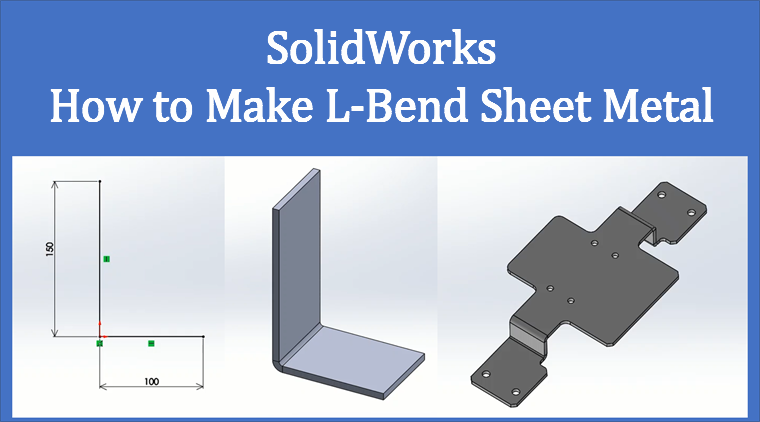
How to Make L-Bend Sheet Metal in SolidWorks, Explained with Screenshots
Sketch an L-shaped profile, then set thickness, extrude depth, and bend radius in Base Flange — that is the simplest bent sheet-metal part in SolidWorks. The walkthrough also shows how to reveal the Sheet Metal tab and how to pick up a sketch you already exited, with numbered screens for…
-

Forward and Inverse Kinematics Explained with Live Diagrams (2): Workspace and Singularities
Where a planar arm can and cannot reach, where its two solutions collapse into one, and how much reach you give up once you also fix the orientation of the tip — explained with diagrams you can drag.
-

Forward and Inverse Kinematics Explained with Live Diagrams (1): The Planar 2-Link Arm
Forward kinematics turns joint angles into a tip position, and inverse kinematics goes back the other way. Both are explained here with a planar arm you can drag: why the forward direction has exactly one answer, why the inverse one has two, and what a third link buys you.
-
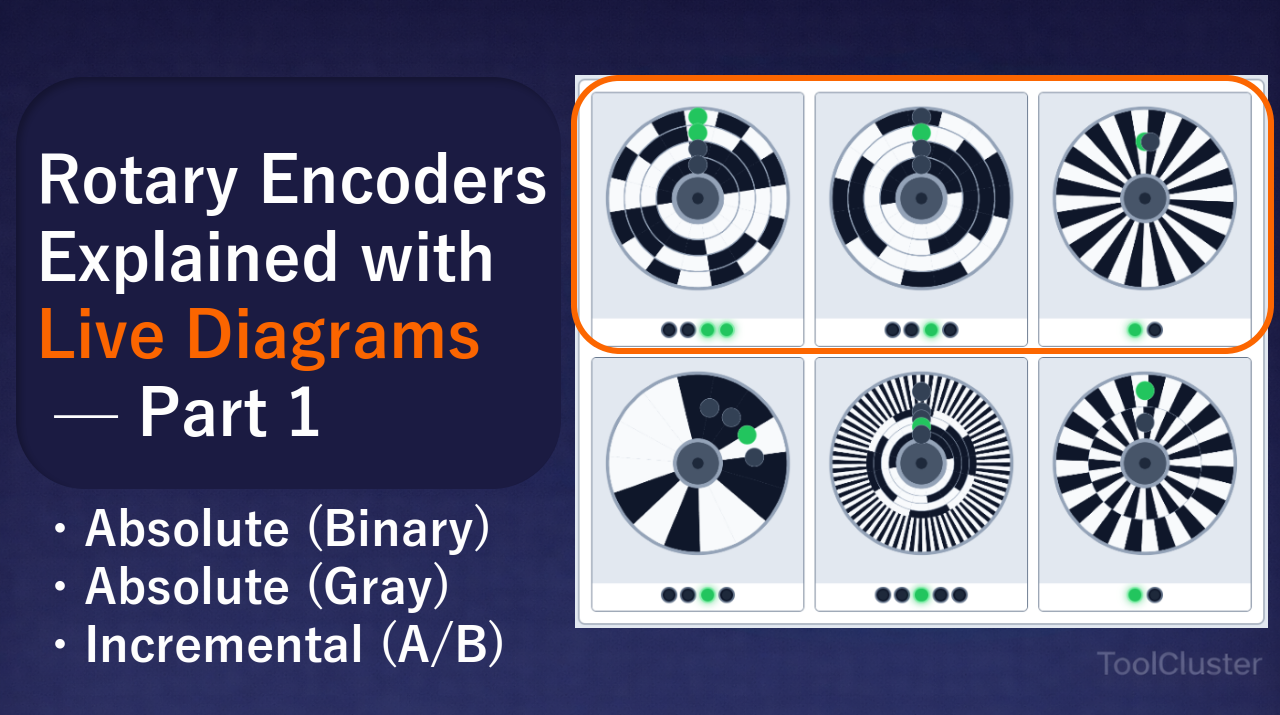
Rotary Encoders Explained with Live Diagrams (1): Binary, Gray, Incremental
How rotary encoder discs carry position: multitrack absolute discs in binary and Gray code, plus incremental A/B channels, shown with diagrams you can spin.
-
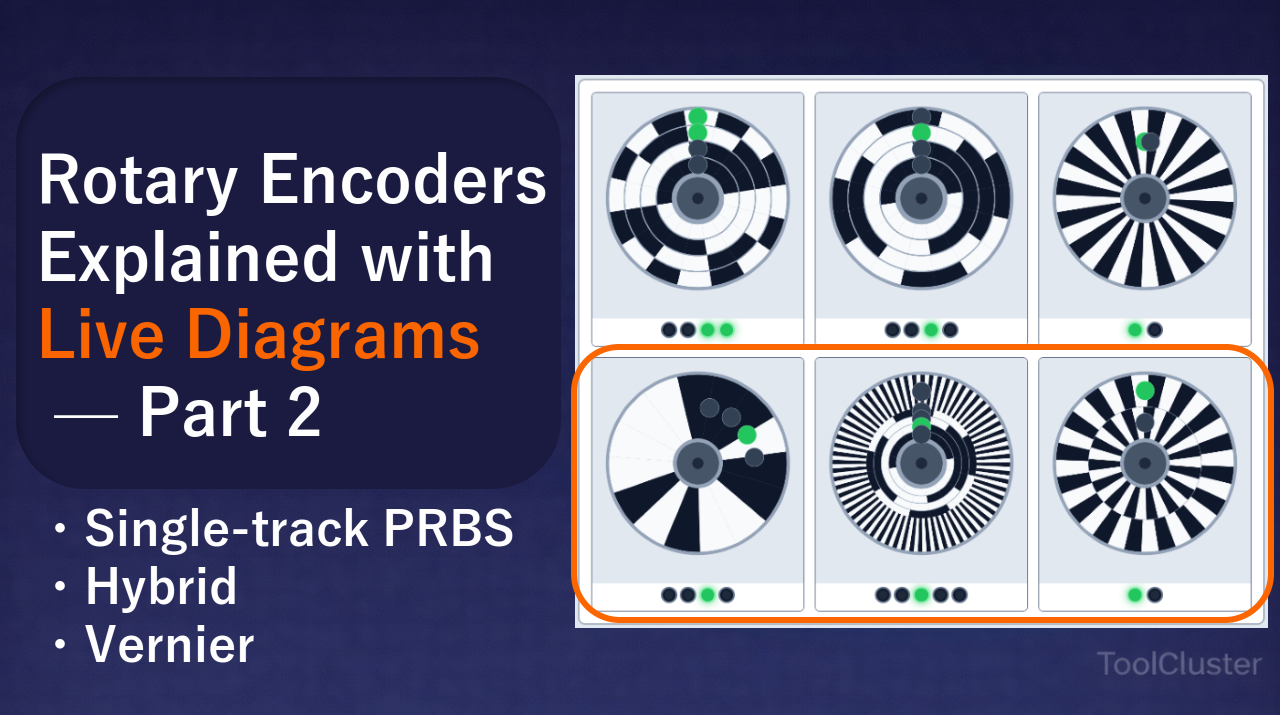
Rotary Encoders Explained with Live Diagrams (2): Single Track, Hybrid, Vernier
Single-track PRBS, hybrid coarse-plus-fine, and vernier encoder discs explained with diagrams you can spin, including what each figure deliberately leaves out.
-
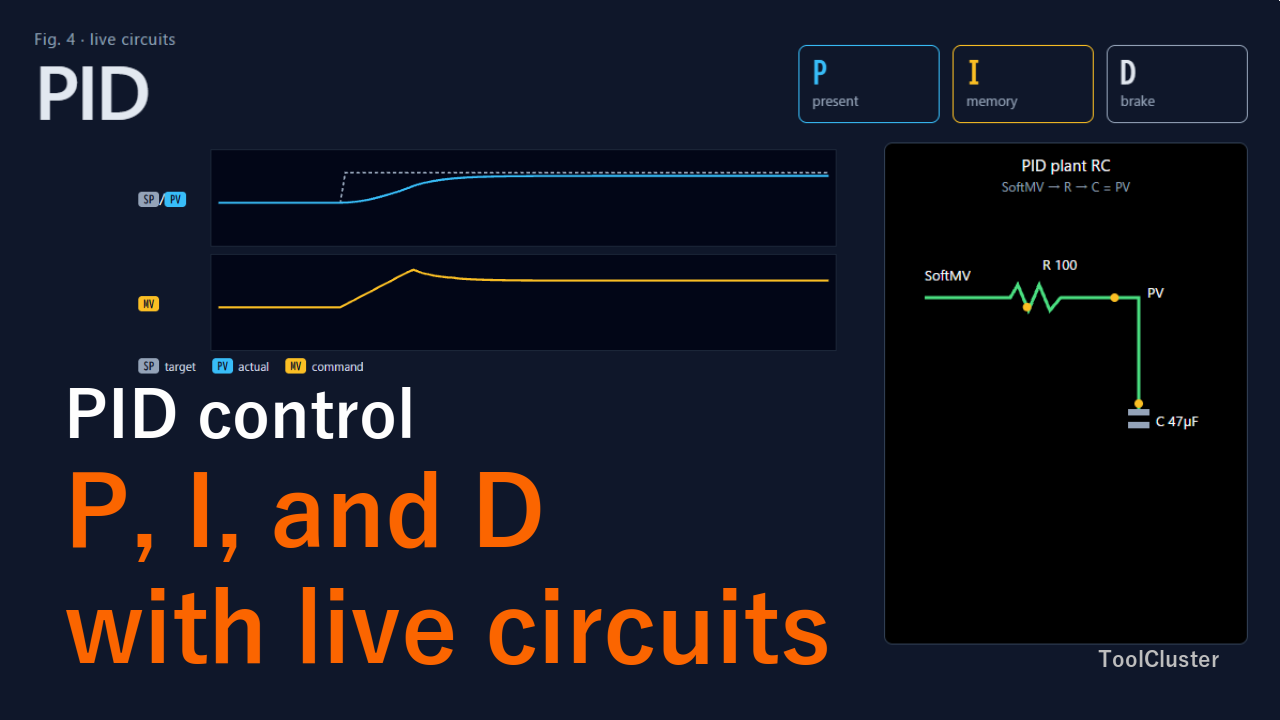
What Is PID Control? P, I, and D Explained with Live Circuits
PID control, explained hands-on: every figure in this article is a live circuit with real-time charts that respond the moment you move a slider. We start from plain on-off switching and add one term at a time — P, then PI, then PID — so the meaning of each letter…
-

Why Don’t FLOAT Sums Add Up? Floating-Point Rounding Error, Explained with Live Graphs
Every receipt checks out on its own, yet the monthly total is one cent off — usually that’s not a bug, it’s floating-point numbers (FLOAT) holding values only approximately. This article lets you see it happen, interactively: a number line showing how decimal 0.1 misses the binary tick marks, a…
-
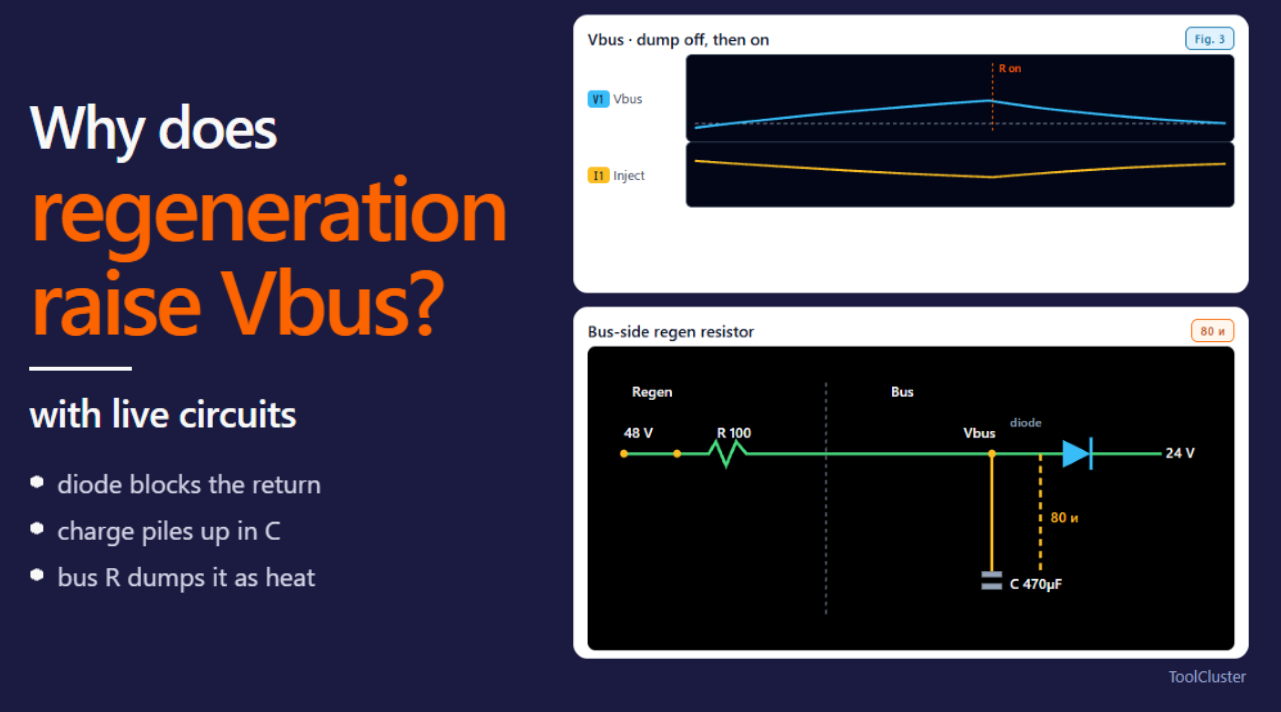
Why Does Regeneration Raise the Bus Voltage? ── Regen Resistors Explained with Live Circuit Diagrams
Regeneration returns a motor’s energy to the supply as electricity ── except that most real DC supplies are not built to accept current flowing back in. Energy with nowhere to go piles up in the DC bus capacitors, and the bus voltage swells. This article watches that voltage balloon ──…
-
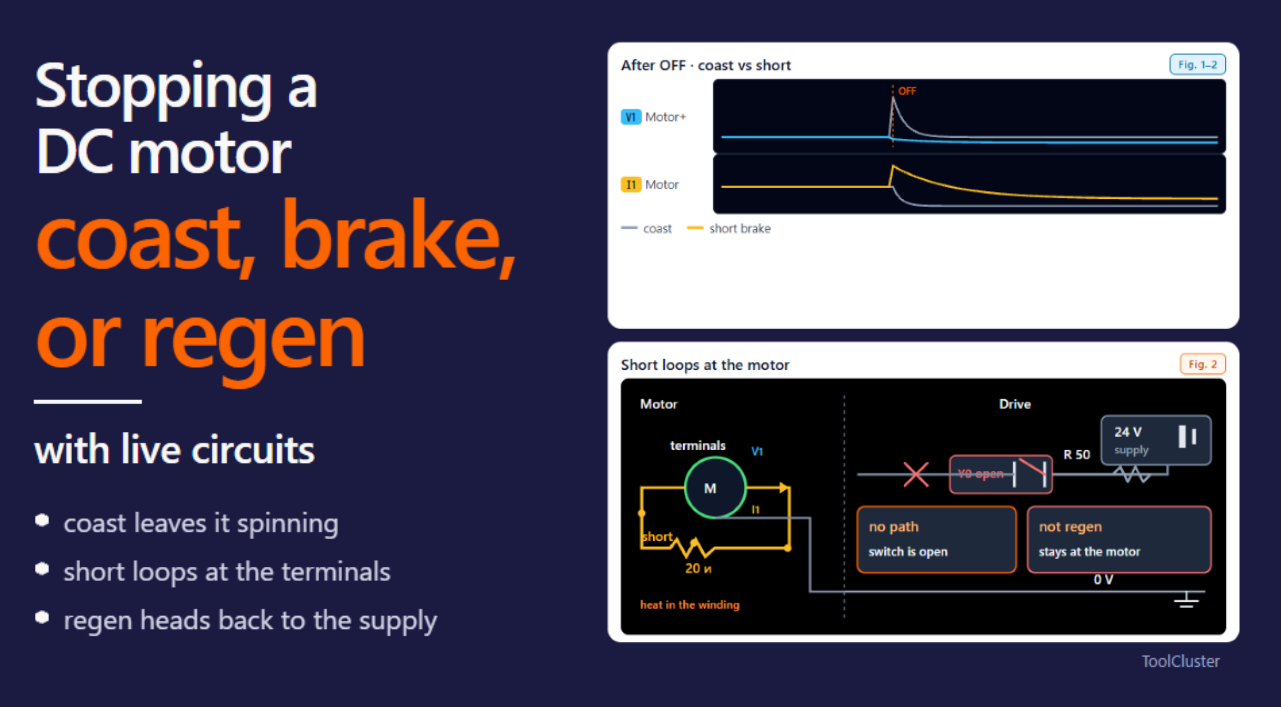
Stopping a DC Motor, Explained with Live Circuit Diagrams ── Coast vs. Brake vs. Regeneration
Switch off the drive and a motor keeps turning ── momentum and winding current both need somewhere to go. The answers to that question are exactly what coast, short-circuit brake, brake resistor, and regeneration distinguish. This article watches what happens right after a DC motor’s drive is cut, using live…
-
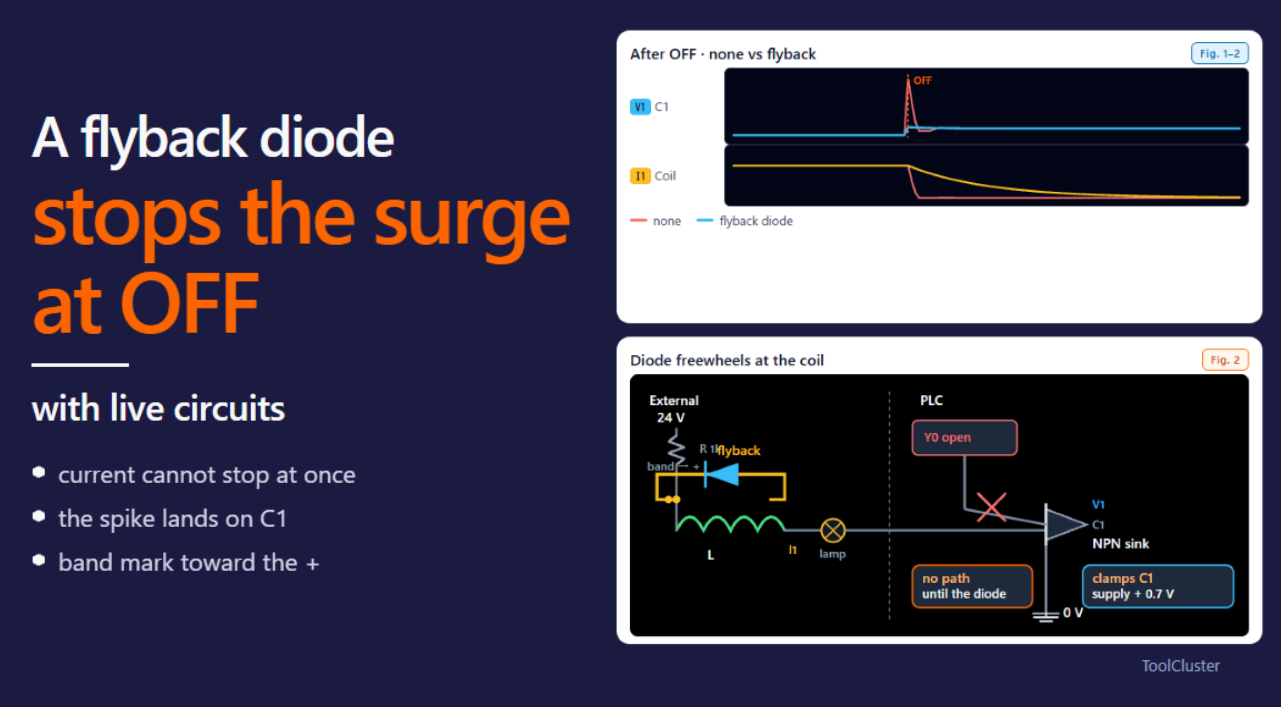
Coil Back-EMF Explained with Live Circuit Diagrams ── What the Flyback Diode Really Does
Switch off a relay or a solenoid valve from a PLC transistor output, and at that very instant the output device can die ── killed by the back-EMF (surge voltage) the coil generates at turn-off. This article puts those few milliseconds on screen with live circuit diagrams and real-time voltage/current…